Longevity Clinics in North America
North America has 74 verified longevity clinics in this directory, across 3 countries and 44 cities, offering Comprehensive Biomarker Panels, Concierge Membership and Executive Physical. Facts are checked against each clinic's own website.
Facts on this page are checked against each clinic's own website. Oldest check: 30 August 2026.
Countries in North America
Each country page sets out what the public health system there already covers, where it stops, and which register you can check a doctor on.
United States
All 65 in United States
AgeReversalMD
San Diego · United States
AgeReversalMD is a physician-led longevity clinic in La Jolla, San Diego, offering plasma exchange, NAD+ IV therapy, PRP injections and hormone therapy.

AI Longevity Clinic
Miami, FL · United States
AI Longevity Clinic is a longevity clinic in Miami listing full-body MRI, hyperbaric oxygen, stem cell therapy and IV vitamin therapy.

Avita MD - Los Gatos
Los Gatos · United States
Los Gatos clinic offering a 60-plus marker blood panel, hormone therapy and NAD+ drips; it says it takes Medicare and most PPO plans.

Biograph - New York City
New York, NY · United States
Biograph - New York City is a longevity clinic listing full-body MRI, VO2 max testing, DEXA scans and biomarker panels.

Biograph - San Francisco Bay Area
San Mateo, CA · United States
Biograph - San Francisco Bay Area in San Mateo lists 6 longevity services, including full-body MRI, VO2 max testing, DEXA scans and biomarker panels.

Biohackr Health
San Francisco · United States
San Francisco clinic on Union Street offering biological age and biomarker testing, VO2 max testing, NAD+ and nutrient drips, and hormone therapy.
Canada
All 5 in Canada
Aeon Future Health
Calgary, Alberta · Canada
Calgary longevity clinic offering staged health assessments, hormone programmes, full-body MRI, glucose monitoring and IV infusion therapy.

Clinique Printemps
Montreal, Quebec · Canada
Montreal longevity practice offering epigenetic age testing, full-body MRI, hormone mapping and four priced annual programmes.

Lifespan Medical
North Vancouver, British Columbia · Canada
North Vancouver private clinic: 70-plus biomarkers, DEXA scans, VO2 max and cancer screening for a published $4,500 a year.

LifespanMD
Ottawa, Ontario · Canada
Ottawa membership clinic built on a two-day wellness assessment with VO2 max testing, DEXA, glucose monitoring and whole-body MRI via Prenuvo.

Medcan
Toronto, Ontario · Canada
Medcan Toronto costs CAD 4,250 plus tax for a one-day, 100+ biomarker assessment; Year-Round Care membership from CAD 1,430 a year.
Mexico
All 4 in Mexico
Cenegenics Mexico
Mexico City · Mexico
Santa Fe arm of the US age-management group, offering DEXA scans, VO2 max testing, biological age tests and NAD+ drips.

Longevity Medical Institute
Punta Mita, Nayarit · Mexico
Longevity Medical Institute in Punta Mita lists 7 longevity services, including full-body MRI, biomarker panels, hyperbaric oxygen and stem cell therapy.
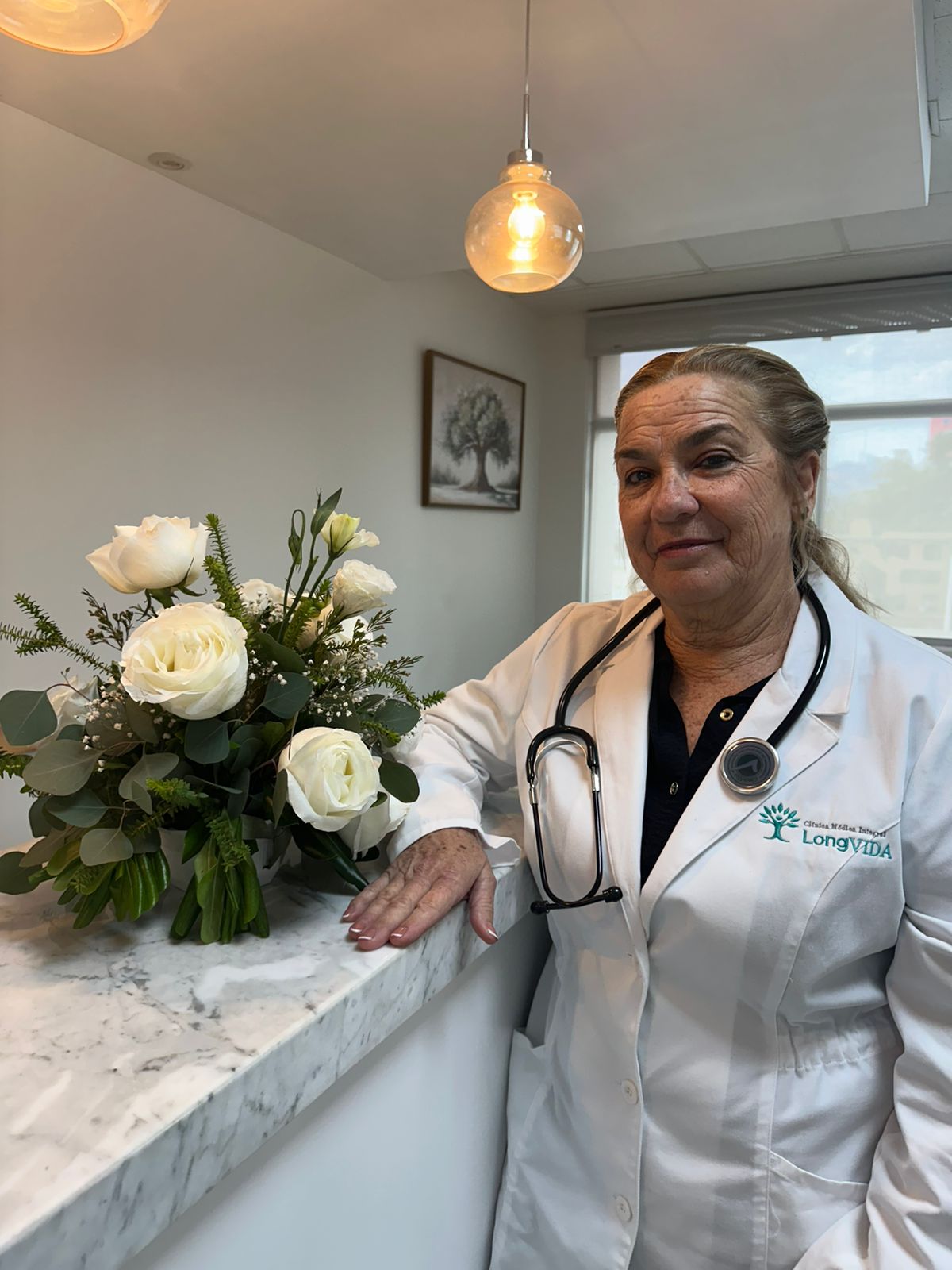
LongVIDA
Tijuana, Baja California · Mexico
Tijuana clinic offering 12 medical specialties, geriatrics, bioregulatory ozone and IV drip therapy, plus corporate wellbeing programmes.

Lonvida
Mexico City · Mexico
Polanco clinic selling a two-visit check-up with 150+ blood biomarkers, DNA testing, NAD+ drips and mesenchymal stem cell infusions.
What you will find in North America
Across the United States, Canada and Mexico longevity clinics sell the same menu - whole-body magnetic resonance imaging (MRI), long blood panels, hormone prescribing and cell infusions - and in all three countries insurance and public cover pay for almost none of it. The gate is the same everywhere: an insured or public system buys a test when it is medically necessary, or when it sits on a short official prevention list, and whole-body scans and biological-age panels sit on neither. What changes at each border is not the test list but who may prescribe what afterwards.
The provider shapes differ accordingly. American listings are direct-pay practices, usually a membership or annual fee for access with imaging, laboratories and prescriptions billed on top; Canadian listings are mostly packaged executive health, sold lawfully in the uninsured space beside a single-payer system precisely because the day is not a medically required service; Mexican listings are largely inbound medical travel, quoted in US dollars for people who flew or drove in.
Inside each country the listings split again, between diagnostics-only operations that hand over a report and end the relationship, membership practices with a named responsible physician, and treatment-led clinics where the testing is the front end of an infusion and prescribing business.
How North American systems differ
Start with what the insured systems actually buy. In the United States the Affordable Care Act requires most health plans to cover, without cost sharing, preventive services graded A or B by the United States Preventive Services Task Force, immunisations recommended by the Advisory Committee on Immunization Practices, and the preventive care set out in Health Resources and Services Administration guidelines for women, infants, children and adolescents. That Task Force catalogue runs to a little over a hundred current topics and contains no recommendation for whole-body MRI, biological-age panels or advanced metabolomic testing, and Medicare separately excludes payment for routine physical checkups by statute.
Canada's Canada Health Act insures "hospital services, physician services and surgical-dental services", and defines physician services as "any medically required services rendered by medical practitioners", which leaves everything not medically required outside the plan and lawfully billable in private. British Columbia's Medical Services Plan states the boundary plainly, excluding preventive services and screening tests not supported by evidence of medical effectiveness and giving routine annual complete physical examinations, whole body computed tomography (CT) scans and prostate specific antigen (PSA) tests as its own examples. Ontario replaced the adult annual physical with a Periodic Health Visit after a November 2012 agreement between the province and the Ontario Medical Association, and every province sets its own approach.
Mexico's public cover is split between the social-security institutes for formal employees and Servicios de Salud del Instituto Mexicano del Seguro Social para el Bienestar (IMSS-Bienestar), the decentralised federal body created in 2022 to provide free medical and hospital care to people without social security. Neither is built around elective screening for people who are well.
Most of what these clinics offer has an ordinary route when there is a clinical reason for it. A symptom, an abnormal result or a documented family history gets the same MRI, the same cardiac imaging and the same hormone panel ordered inside the normal system in all three countries. What the private route sells is the same test without an indication, on a date of the buyer's choosing - which is also why the American College of Radiology, in a position statement adopted in 2000 and revised in 2002, said it did not believe there was sufficient evidence to justify recommending total body CT screening for patients with no symptoms or a family history suggesting disease.
Clinical responsibility sits with an individually licensed doctor, and each country has a register worth checking. American physicians are licensed state by state; Canadian physicians appear on the public register of a provincial college such as the College of Physicians and Surgeons of Ontario; Mexican practitioners hold a cédula profesional, the federal professional licence, searchable in the Registro Nacional de Profesionistas kept by the education ministry.
Mexican speciality certification runs through councils recognised by the Comité Normativo Nacional de Consejos de Especialidades Médicas, the national committee of speciality councils named in Article 81 of the general health law, and Mexico's Consejo de Salubridad General (General Health Council) separately certifies medical establishments on a voluntary basis, which is a checkable fact rather than a marketing badge.
Longevity medicine is not a certified speciality: the American Board of Medical Specialties has 24 member boards certifying physicians in 38 specialities and 89 subspecialities, and longevity is not among them. A fellowship or diploma in the field therefore comes from a private membership body and carries no licensing weight, because the licence is the state board, the provincial college register or the cédula.
Prescribing is where the three systems diverge most, and it is the practical reason people cross the southern border. Health Canada treats all cell therapies as drugs under the Food and Drugs Act, has authorised only three of them, and otherwise permits them solely inside a clinical trial it has approved. The United States Court of Appeals for the Ninth Circuit held in September 2024 that the stromal vascular fraction a clinic prepares from a patient's own fat is a drug under federal food and drug law, and is not exempt as a same-day surgical procedure.
Mexico requires a sanitary licence both for regenerative medicine establishments and for the handling of stem cells, and its federal health-risk regulator, the Comisión Federal para la Protección contra Riesgos Sanitarios (COFEPRIS), suspended a Mexico City clinic offering stem cell treatments in 2015 on the ground that such treatments lack authorisation because their efficacy is not proven. The southern difference is enforcement intensity and how a facility licence reads in marketing copy, not a legal green light.
On drugs, testosterone is a controlled substance on both sides of the northern border, listed in Schedule III of the American Controlled Substances Act and Schedule IV of Canada's Controlled Drugs and Substances Act, and distributing human growth hormone in the United States for any use other than a recognised medical condition authorised by the federal health secretary and ordered by a physician is a federal offence carrying up to five years in prison. An American compounding pharmacy may only work from a bulk substance that meets an applicable United States Pharmacopeia or National Formulary monograph, is a component of an approved drug, or appears on a list developed by the federal health secretary. Health Canada, separately, advised in April 2026 that peptides are generally regulated as prescription drugs in Canada and that unauthorised injectable peptides sold online, BPC-157 among them, are illegal and have not been assessed for safety, efficacy or quality.
Services available in North America
Every service listed by at least one verified clinic here, most widely offered first. Each links to what it is, what it costs and what the evidence shows.
Diagnostic
A longevity blood panel goes well past a routine check-up, adding cholesterol particle counts, inflammation markers, hormones and early metabolic signals.
An executive physical packs a year of check-ups into one day: bloods, imaging, a heart and fitness assessment, and a doctor who explains all of it.
A full-body MRI is a whole-body scan that looks for tumours, aneurysms and organ disease before symptoms appear, using magnets rather than X-rays.
A biological age test estimates how old your body behaves, usually by reading chemical tags on your DNA and converting the pattern into a number of years.
A VO2 max test measures the most oxygen your body can use during hard exercise, the fitness number most strongly tied to long-term health.
A DEXA scan is a low-dose X-ray that measures muscle, fat, the fat around your organs and bone density far more precisely than any scale can.
A continuous glucose monitor is a small arm sensor that tracks blood sugar every few minutes for two weeks, showing what each meal actually does to you.
Therapy
Hormone optimisation is prescription treatment - testosterone, menopausal hormone therapy, thyroid - given for symptoms confirmed by repeat blood tests.
IV vitamin therapy drips vitamins and minerals straight into a vein. It is real treatment for a diagnosed deficiency and weakly supported for anyone else.
Peptide therapy prescribes short chains of amino acids that act as signals in the body, a category running from licensed medicines to unapproved compounds.
NAD+ IV therapy is a slow drip of a molecule every cell uses to move energy around. The reasoning is well known; the human evidence behind it is very thin.
Hyperbaric oxygen therapy means breathing oxygen inside a pressurised chamber. It is proven hospital treatment for a short, specific list of conditions.
A PRP injection concentrates the healing platelets from your own blood and puts them back into a painful joint, a stubborn tendon or the scalp.
Stem cell therapy injects cells from your own body or a donor, most often into a painful joint. Almost all of it is unapproved and the trials are mixed.
Concierge
Concierge medicine is an annual fee paid to a practice for access: same-day appointments, longer visits, and a doctor who carries far fewer patients.
Lifestyle
Red light therapy shines red and near-infrared light on the skin. The evidence is reasonable for skin and hair, mixed for pain, and absent for ageing.
Whole-body cryotherapy is two to three minutes in a chamber near minus 120 degrees Celsius, used for recovery, with less evidence behind it than an ice bath.
A cold plunge is a few minutes in water around 4 to 15 degrees Celsius. Reliable for mood and soreness, and best kept well away from your lifting sessions.
What it costs in North America
From this directory
Of the 54 priced clinics in North America, 2 are in the mid band ($$), 41 in the upper band ($$$) and 11 in the top band ($$$$). 20 further listings do not publish enough to place. 22 of the 74 require a membership rather than selling services one at a time; the rest can be booked individually.
The market has three shapes and they price differently. American listings sell access first and services second, so the headline membership figure and the first-year total are rarely the same number.
Canadian listings sell a packaged day that is lawfully private because it is not a medically required service. What British Columbia forbids is private payment and duplicate private insurance for the services its plan does insure, a prohibition the courts upheld and the Supreme Court of Canada left standing when it refused leave to appeal in April 2023. Mexican listings are quoted for arrivals, in US dollars, sometimes with the hotel and the airport transfer folded in.
Two quotes for what looks like the same package rarely describe the same work. The variables that move the number are whether a named physician reads the scan or a report is simply generated and posted, how much clinician time sits inside the fee against how much is billed afterwards, whether repeat testing at six or twelve months is included, whether the clinic owns the scanner or books slots on someone else's, and whether prescriptions, infusions and supplements are separate line items. Insurance is not the variable: in all three countries it pays for the incidental findings that follow, not for the screening that produced them.
Crossing a border adds questions no price list answers. Who explains an ambiguous nodule three weeks later, at home, on a Tuesday night; who holds the file - under Mexico's clinical records standard the record is the property of the institution or provider that generated it, the patient's entitlement is a clinical summary that has to be requested in writing, and the record is kept for a minimum of five years from the last medical act - and whether the follow-up scan requires another flight.
The United States Centers for Disease Control and Prevention tells medical travellers to make sure they can get any needed follow-up care at home, to carry copies of their medical records, and warns that follow-up for complications can be expensive and might not be covered by their insurance. The mundane version of that advice is to leave with the imaging on a disc and the raw laboratory values, not a summary letter.
What the evidence says
Independent reviews of the research behind services these clinics sell. They run whether or not the verdict suits the directory.
Longevity clinics in North America: common questions
Does health insurance cover longevity clinic testing in the United States, Canada or Mexico?
Almost never, in all three countries. American plans must cover without cost sharing only preventive services graded A or B by the United States Preventive Services Task Force, plus certain immunisations and the women's, infant, child and adolescent services in federal guidelines; whole-body scans and biological-age panels are on none of those lists, and Medicare excludes payment for routine physical checkups by statute. Canada's Canada Health Act insures medically required physician services, which leaves anything not medically required outside the provincial plan. Mexico's public systems, the social-security institutes and IMSS-Bienestar, are built around medical and hospital care rather than elective screening for people who are well.
Why do people cross the border into Mexico for stem cell treatment?
Because the three countries regulate cell products very differently. Health Canada treats all cell therapies as drugs under the Food and Drugs Act, has authorised only three of them, and otherwise allows them solely inside a clinical trial it has approved. In the United States, a federal appeals court held in September 2024 that the stromal vascular fraction a clinic prepares from a patient's own fat is a drug under federal food and drug law and is not exempt as a same-day surgical procedure. Mexico requires a sanitary licence for regenerative medicine establishments, and its health-risk regulator COFEPRIS has suspended a clinic offering stem cell treatments, saying they lack authorisation because their efficacy is not proven.
Can a doctor legally prescribe peptides such as BPC-157 in the United States or Canada?
Not routinely, in either country. An American compounding pharmacy may only use a bulk substance that meets an applicable United States Pharmacopeia or National Formulary monograph, is a component of an approved drug, or appears on a list developed by the federal health secretary. Health Canada says peptides are generally regulated as prescription drugs, and in April 2026 it warned that unauthorised injectable peptides sold online are illegal and unassessed for safety, efficacy and quality, naming BPC-157, a synthetic peptide sold for injection, among them.
Is longevity medicine a recognised medical speciality in North America?
It is not a certified speciality. The American Board of Medical Specialties has 24 member boards certifying physicians in 38 specialities and 89 subspecialities, and longevity medicine is not among them. Clinicians in these clinics hold ordinary credentials in fields such as family medicine, internal medicine or radiology, plus certificates from private membership bodies that carry no statutory licensing weight. Check the state, provincial or federal register that actually licenses them.
What happens to follow-up and my records if I have treatment in Mexico?
You arrange follow-up yourself, usually at home and usually at your own cost. Under Mexico's clinical records standard the record is the property of the institution or provider that generated it, the patient's entitlement is a clinical summary that has to be requested in writing, and records are kept for at least five years from the last medical act. Ask for imaging on disc and raw laboratory values before leaving. The United States Centers for Disease Control and Prevention advises travellers to make sure needed follow-up care is available at home and warns that care for complications may not be covered by insurance.