Longevity Clinics in Austria
Austria has 7 verified longevity clinics in this directory, in 6 cities, offering Comprehensive Biomarker Panels, IV Vitamin Therapy and Executive Physical. Facts are checked against each clinic's own website.
Facts on this page are checked against each clinic's own website. Oldest check: 30 August 2026.
Vienna
Vienna guide
Healthy Aging Medical Center Vienna
Vienna, Vienna · Austria
Vienna practice testing 80-plus gene variants and biological age from telomeres, with hormone therapy, own-blood plasma injections and oxygen sessions.

Longevity Center Vienna
Vienna, Vienna · Austria
Vienna 1st-district longevity centre with published prices - cryotherapy from 49 euros, NAD+ drips from 349, fitness and metabolism testing from 550.
Altaussee
Altaussee guide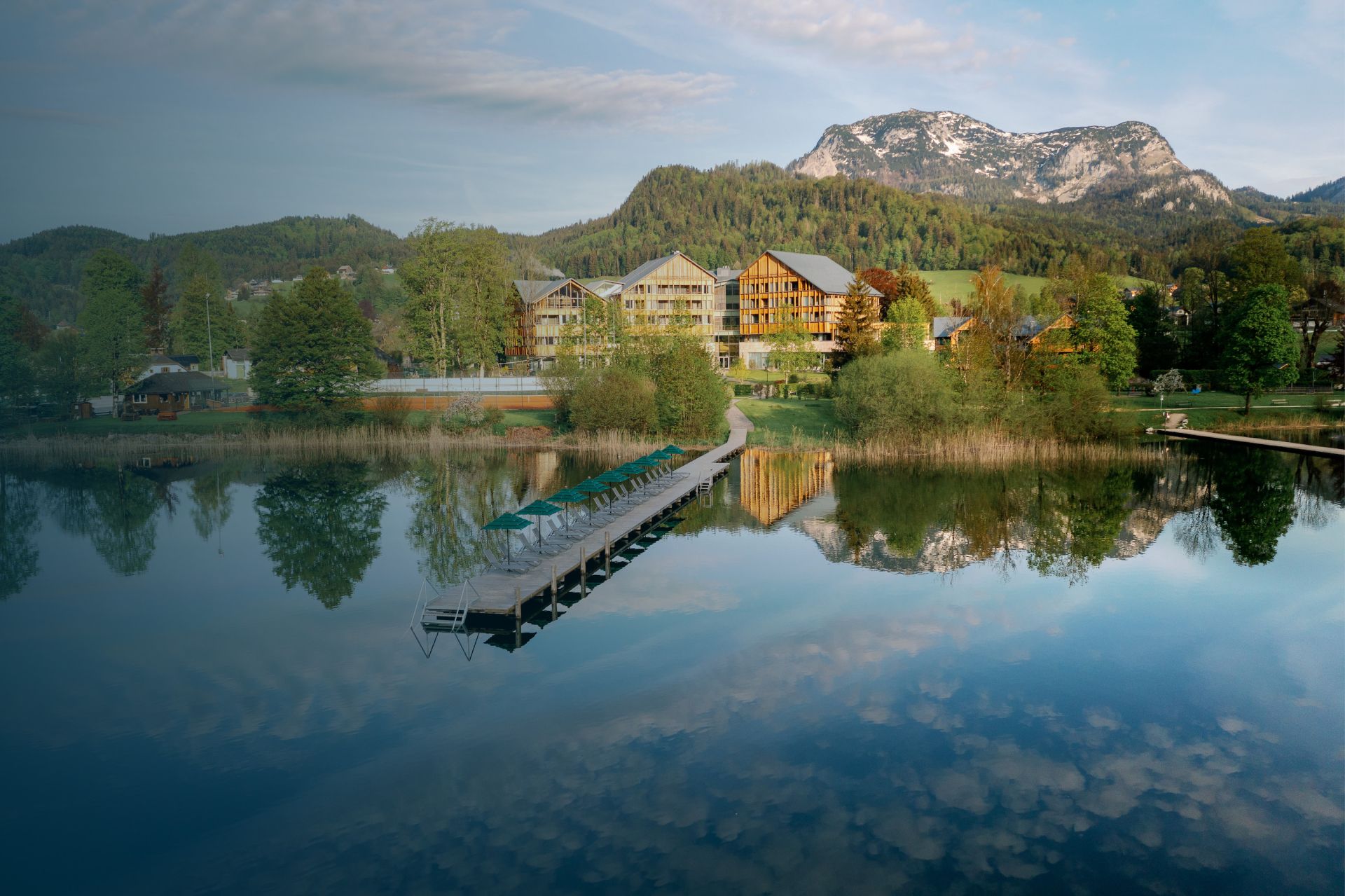
Graz
Graz guide
Innsbruck
Innsbruck guide
Lans
Lans guide
Maria Woerth
Maria Woerth guide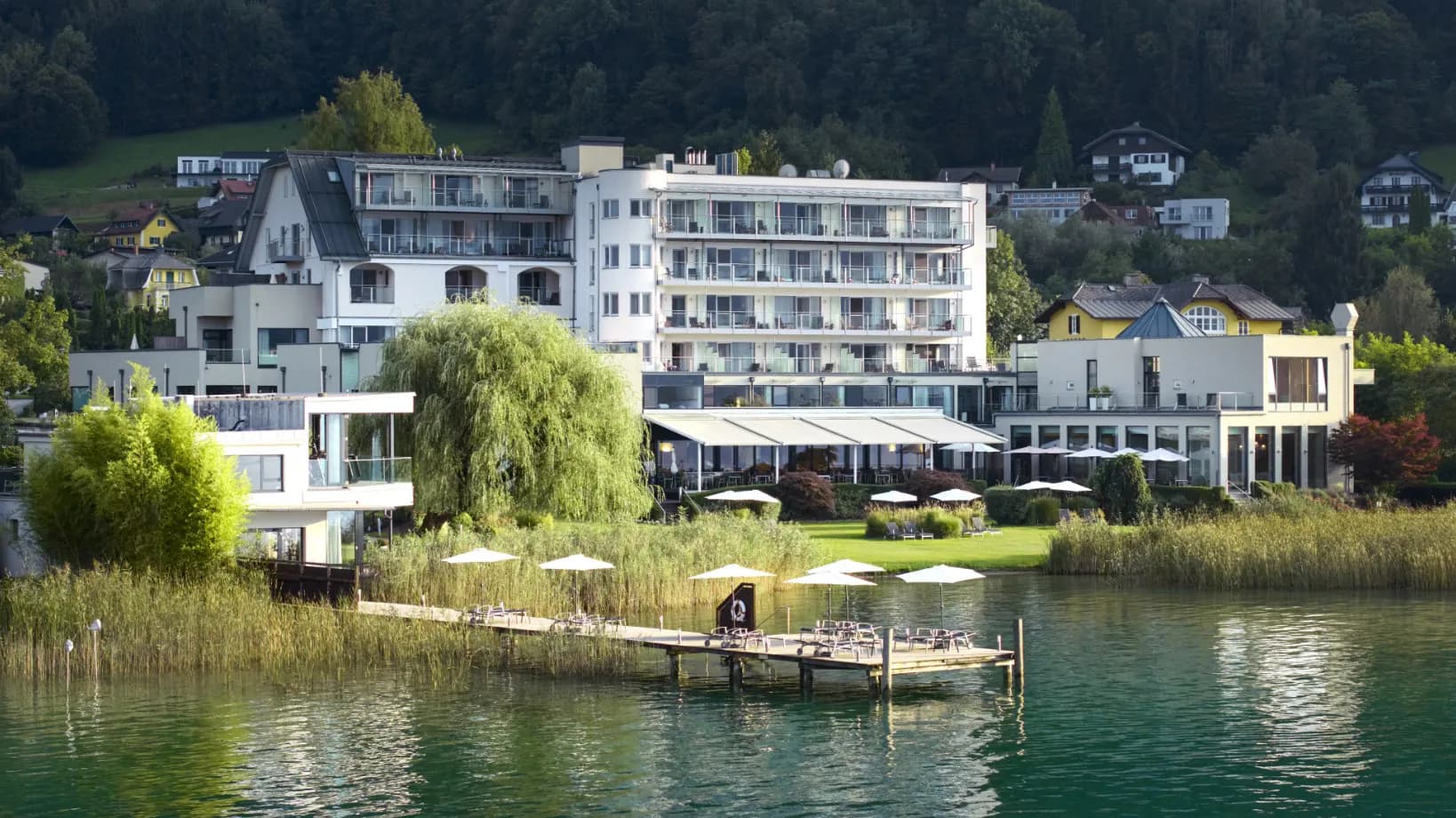
Cities in Austria
Each city page carries the local listings, the services those clinics offer and what to know before booking there.
What you will find in Austria
Austria sells the private preventive health check in two shapes that barely resemble each other: a residential stay of one to three weeks at a mountain clinic, or a single morning in a city consulting room. The residential end runs on the country's spa-medicine tradition, and much of it is built around Mayr medicine, a doctor-supervised digestive and dietary regimen named after Franz Xaver Mayr, an Austrian physician who died in 1965.
It is formal enough that the national medical chamber awards a continuing-education diploma in it. At those places the tests and the consultations are folded into the stay, so the medicine and the hotel arrive on a single invoice.
The rest of the market is more familiar. Doctor-led private practices, usually a general practitioner or an internist working as a Wahlarzt, meaning a doctor who holds no contract with the statutory sickness funds and bills the patient directly, have added extended blood panels, body-composition measurement and cardiovascular risk scoring to an ordinary consulting room.
Radiology and diagnostic centres sell imaging straight to self-payers, including whole-body magnetic resonance imaging and coronary calcium scoring, a computed tomography scan that measures calcified plaque in the arteries of the heart. Below those sit single-service operators repeating one thing: intravenous drips of vitamins or NAD+ (nicotinamide adenine dinucleotide, a coenzyme involved in cell metabolism), hormone consultations, or injectable regenerative products.
Longevity medicine in Austria
Austria's public system already gives every adult resident a free annual check, which is the first thing worth knowing before paying for one. More than 99% of the population was covered through a statutory sickness fund in 2023, and the Vorsorgeuntersuchung, or Gesundheits-Check, is an annual entitlement written into the Allgemeines Sozialversicherungsgesetz (ASVG, the General Social Insurance Act), aimed at the widespread diseases: cancer, diabetes and cardiovascular disorders.
It runs to a medical history, a physical examination, blood and urine tests and a check for gum disease, with hearing and vision screening added from 65. The Österreichische Gesundheitskasse (ÖGK, the Austrian Health Insurance Fund) provides it once a year at no charge to anyone aged 18 or over living in Austria, including residents who have no insurance at all.
Organised cancer screening sits alongside it. Women aged 45 to 74 can have a mammogram every 24 months under the Österreichisches Brustkrebs-Früherkennungsprogramm, the national breast cancer early detection programme that started in January 2014 and had its upper age limit raised from 69 to 74 in January 2023, with the e-card, Austria's electronic insurance card, activated automatically and no referral needed.
From 45, bowel cancer screening is offered as a stool blood test every two years or a colonoscopy every ten, and cervical smears are offered to women from 18. What the state deliberately does not do is scan a well person from head to toe, and whole-body imaging, biological-age panels and broad hormone or lipid profiles sit outside the national programme, because a screening programme adds a test only when the expected benefit across everyone tested outweighs the false alarms and the follow-up scans and biopsies those set off.
Much of what private clinics sell is available through the ordinary system when there is a clinical reason for it. A colonoscopy, a cardiac investigation, thyroid and hormone testing, a sleep study, a DEXA scan (dual-energy X-ray absorptiometry, which measures bone density) and a magnetic resonance scan are all routine investigations a Kassenarzt, a doctor holding a sickness-fund contract, can arrange.
What that visit costs you turns on which fund you belong to rather than on the test: the largest fund charges nothing for the consultation, while the schemes covering the self-employed and public-sector staff take a percentage of the cost. The gate is a medical indication rather than a fee, so a symptom, a strong family history or an abnormal result is worth taking to a contracted doctor before paying for the same test privately.
Clinical responsibility always rests with a named doctor on the Ärzteliste, the statutory register of doctors kept by the Österreichische Ärztekammer (ÖÄK, the Austrian Medical Chamber) under the Ärztegesetz 1998, the medical practitioners act. Registration is a legal condition of practising medicine in Austria, and the public part of the register is published online showing each doctor's registration number, name, academic degrees, professional titles and diplomas, practice addresses and whether they hold a sickness-fund contract.
Longevity medicine is not a recognised speciality in Austria. The training regulation, the Ärztinnen-/Ärzte-Ausbildungsordnung 2015, lists the recognised specialist fields in its annexes, none of them is longevity, preventive or age-management medicine, and training to specialist level runs to 72 months including the basic stage.
What doctors in this market do carry are ÖÄK diplomas, structured continuing-education awards in fields such as Kur-, Präventivmedizin und Wellness (spa medicine, preventive medicine and wellness), Ernährungsmedizin (nutritional medicine) and Diagnostik und Therapie nach Dr. F. X. Mayr. Those are genuine qualifications, though the chamber's own rules state that acquiring one cannot cross or widen the boundaries of a doctor's speciality.
Prescribing and product law draw a firmer line than clinic marketing sometimes implies. Only a doctor entered on the Ärzteliste may practise medicine here, prescribing included, and most medicines placed on the Austrian market need a marketing authorisation from the Bundesamt für Sicherheit im Gesundheitswesen (BASG, the Federal Office for Safety in Health Care), whose operational work is carried out by the medicines and medical devices agency at the Austrian Agency for Health and Food Safety (AGES).
Anything based on living cells or genes is stricter again. It counts as an advanced therapy medicinal product, which is authorised centrally through the European Medicines Agency rather than nationally, and the narrow exception in EU law is the hospital exemption: a product prepared on a non-routine basis to an individual prescription for one named patient, used within the same member state in a hospital under a doctor's exclusive professional responsibility, and manufactured under an authorisation from the national regulator.
BASG separately authorises the tissue banks and certifies the procurement establishments that handle human cells and tissues, and keeps the register of them, so a provider offering anything cell-based should be able to name the authorised establishment behind it.
Services available in Austria
Every service listed by at least one verified clinic here, with the clinics that offer it. Each service links to what it is, what it costs and what the evidence shows.
Therapy
IV vitamin therapy drips vitamins and minerals straight into a vein. It is real treatment for a diagnosed deficiency and weakly supported for anyone else.
Lanserhof, MAYRLIFE, Clinic for Longevity & Beauty, Park Igls Medical Spa Resort, Longevity Center Vienna and 1 more
A PRP injection concentrates the healing platelets from your own blood and puts them back into a painful joint, a stubborn tendon or the scalp.
Clinic for Longevity & Beauty, Healthy Aging Medical Center Vienna, VIVAMAYR Maria Woerth
NAD+ IV therapy is a slow drip of a molecule every cell uses to move energy around. The reasoning is well known; the human evidence behind it is very thin.
Hormone optimisation is prescription treatment - testosterone, menopausal hormone therapy, thyroid - given for symptoms confirmed by repeat blood tests.
Hyperbaric oxygen therapy means breathing oxygen inside a pressurised chamber. It is proven hospital treatment for a short, specific list of conditions.
Healthy Aging Medical Center Vienna, Longevity Center Vienna
Peptide therapy prescribes short chains of amino acids that act as signals in the body, a category running from licensed medicines to unapproved compounds.
Stem cell therapy injects cells from your own body or a donor, most often into a painful joint. Almost all of it is unapproved and the trials are mixed.
Diagnostic
A longevity blood panel goes well past a routine check-up, adding cholesterol particle counts, inflammation markers, hormones and early metabolic signals.
Lanserhof, MAYRLIFE, Clinic for Longevity & Beauty, Healthy Aging Medical Center Vienna, Park Igls Medical Spa Resort and 2 more
An executive physical packs a year of check-ups into one day: bloods, imaging, a heart and fitness assessment, and a doctor who explains all of it.
Lanserhof, Healthy Aging Medical Center Vienna, Park Igls Medical Spa Resort, VIVAMAYR Maria Woerth
A biological age test estimates how old your body behaves, usually by reading chemical tags on your DNA and converting the pattern into a number of years.
Lanserhof, Clinic for Longevity & Beauty, Healthy Aging Medical Center Vienna
A VO2 max test measures the most oxygen your body can use during hard exercise, the fitness number most strongly tied to long-term health.
Lifestyle
Whole-body cryotherapy is two to three minutes in a chamber near minus 120 degrees Celsius, used for recovery, with less evidence behind it than an ice bath.
Lanserhof, MAYRLIFE, Longevity Center Vienna, VIVAMAYR Maria Woerth
Red light therapy shines red and near-infrared light on the skin. The evidence is reasonable for skin and hair, mixed for pain, and absent for ageing.
Concierge
Concierge medicine is an annual fee paid to a practice for access: same-day appointments, longer visits, and a doctor who carries far fewer patients.
What it costs in Austria
From this directory
Of the 5 priced clinics in Austria, 1 is in the entry band ($), 3 in the upper band ($$$) and 1 in the top band ($$$$). 2 further listings do not publish enough to place.
Austrian private health cover is supplementary and is not designed to fund testing in people who feel well. Voluntary health insurance accounts for just over 6% of health spending, and its best-known product is Sonderklasse cover, which pays for the higher hospital class - a single or double room and a say in who treats you - rather than for outpatient tests.
The one partial refund most readers will meet is the Wahlarzt route, the doctor who holds no sickness-fund contract, and it is routinely misread. The social insurance act entitles you to 80% of what the fund would have paid a contracted doctor for the same service, not 80% of your bill, worked out from the contract fee schedule, and a test with no equivalent in that schedule attracts nothing at all. Since 1 July 2024, a Wahlarzt treating more than 300 different patients a year submits the reimbursement claim to the fund electronically instead of leaving the paperwork to the patient.
The gap between two quoted prices is mostly doctor time and imaging, and at a residential provider it is also the nights you are buying. Ask whether a doctor personally reviews the results with you and for how long, whether a scan is included and who writes the report on it, and, for a stay, how much of the price is bed nights, catering and therapies rather than medicine.
Settle in writing before paying: the itemised list of tests, who is clinically responsible and their entry on the Ärzteliste, what a repeat or follow-up test costs, and the cancellation terms.
Because the retreats draw visitors from abroad, the follow-up questions matter more here than the booking ones. Ask who explains an ambiguous finding and in which language, whether you leave with the raw results and images in a form your own doctor can use, and whether the clinic will write to that doctor.
Establish before travelling whether a recommended repeat scan or biopsy would happen in Austria or at home, and whether it means another trip.
If something goes wrong, each of Austria's regional medical chambers runs a conciliation office whose independent commission issues a proposal rather than a binding decision. Every province also has a Patientenanwaltschaft, an independent patient ombudsman that charges nothing, though its remit covers hospitals and care homes first and reaches doctors in private practice only in some provinces.
What the evidence says
Independent reviews of the research behind services offered by clinics in Austria. They run whether or not the verdict suits the directory.
Longevity clinics in Austria: common questions
Does Austrian health insurance pay for a private longevity check-up?
No, not as a package. Statutory insurance covers a free annual Vorsorgeuntersuchung, the state health check, and the organised cancer screening programmes, and it pays for further investigations when a doctor documents a clinical reason for them. A longevity panel ordered because you asked for it falls outside that. If the doctor is a Wahlarzt, meaning one who holds no sickness-fund contract, you can claim back 80% of what the fund would have paid a contracted doctor for the same service, but only for services that exist in the contract fee schedule at all.
What is a Wahlarzt, and how much money actually comes back?
A Wahlarzt is a doctor in private practice who holds no contract with a statutory sickness fund and bills you directly. The fund then reimburses 80% of what it would have paid a contracted doctor for the same service, calculated from the contract fee schedule rather than from the invoice you paid. Because private fees usually sit well above that schedule, the refund is a fraction of the bill, and anything with no equivalent in the schedule attracts nothing.
Is longevity medicine a recognised medical speciality in Austria?
No. The Austrian training regulation, the Ärztinnen-/Ärzte-Ausbildungsordnung 2015, sets out the recognised specialist fields, and longevity, preventive and age-management medicine are not among them. What doctors here can hold are continuing-education diplomas awarded by the Österreichische Ärztekammer, the Austrian Medical Chamber, including ones in spa medicine and preventive medicine, in nutritional medicine and in Mayr diagnostics and therapy. Those are real qualifications, but the chamber's own rules say that acquiring one cannot cross or widen the boundaries of a doctor's speciality.
How do I check that an Austrian doctor is properly registered?
Look them up on the Ärzteliste, the statutory register of doctors that the Österreichische Ärztekammer, the Austrian Medical Chamber, is required to keep and to publish in part online. Registration is a legal condition of practising medicine in Austria. The public record shows the doctor's registration number, name, academic degrees, professional titles and diplomas, and practice addresses, and whether they hold a contract with a sickness fund. If a clinic will not name the doctor clinically responsible for your tests, that itself tells you something.
Is a private full-body screen better than the free annual check?
That is not established. The free Vorsorgeuntersuchung, the state health check, and the national screening programmes exist because the evidence supported offering those particular tests to whole age groups. Whole-body scans, biological-age panels and wide blood profiles in people without symptoms have not been taken into any Austrian screening programme, and the evidence that they lengthen or improve lives is thin. They do commonly find harmless abnormalities, and each one can lead to further scans, biopsies and worry.