Longevity Clinics in the Middle East
The Middle East has 7 verified longevity clinics in this directory, across 2 countries and 3 cities, offering Comprehensive Biomarker Panels, IV Vitamin Therapy and Biological Age Testing. Facts are checked against each clinic's own website.
Facts on this page are checked against each clinic's own website. Oldest check: 30 August 2026.
Countries in the Middle East
Each country page sets out what the public health system there already covers, where it stops, and which register you can check a doctor on.
United Arab Emirates
All 6 in United Arab Emirates
DNA Health & Wellness - Abu Dhabi
Abu Dhabi · United Arab Emirates
DNA Health & Wellness Abu Dhabi: 50+ DNA tests from AED 2,000, blood screening packages from AED 800, biological age testing, in Al Manhal.

Longevium
Dubai, Dubai · United Arab Emirates
Longevium's Longevity Day in Dubai: one 2.5-3 hour visit from AED 5,000 with ultrasound scanning, a longevity biomarker panel and a peptide plan.

Next Health - Dubai
Dubai, Dubai · United Arab Emirates
Next Health Dubai has two sites, Business Bay and SAAS Tower, offering NAD+ drips, cryotherapy, hyperbaric oxygen, ozone therapy and hormone therapy.
Pura Longevity Clinic
Abu Dhabi · United Arab Emirates
Pura Longevity Clinic sits inside Sheikh Shakhbout Medical City in Abu Dhabi and runs one-day assessments covering 80 or more biomarkers, AI-assisted imaging and biological age scoring.
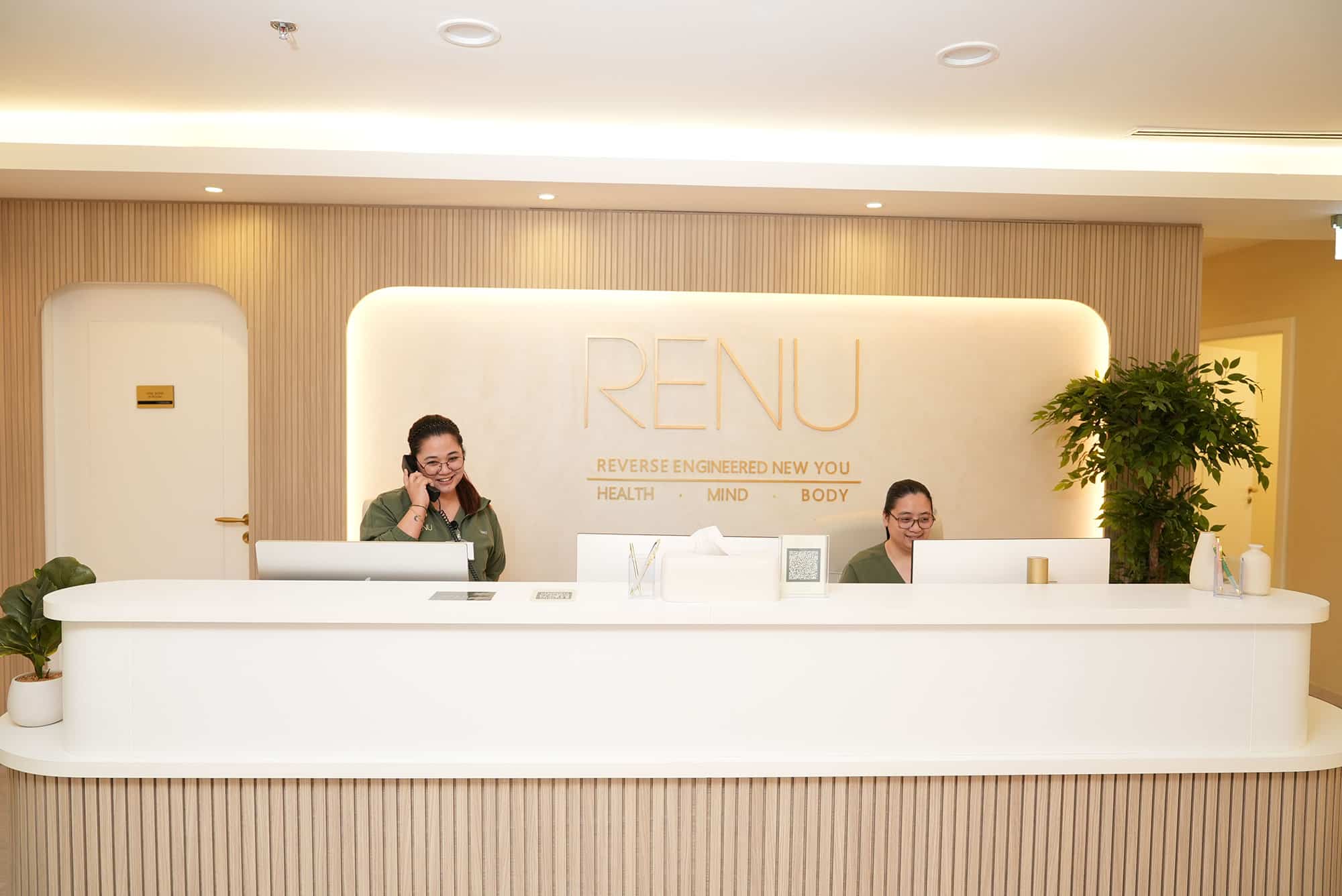
RENU Health Clinic
Dubai, Dubai · United Arab Emirates
Dubai Healthcare City clinic offering biological age testing, full-body check-ups, hormone profiling, NAD+ and IV nutrient drips.

ZOIME
Dubai, Dubai · United Arab Emirates
ZOIME in Dubai lists 6 longevity services, including biological age testing, biomarker panels, stem cell therapy and hormone optimisation.
Qatar
All 1 in Qatar
What you will find in the Middle East
Abu Dhabi has created a licence category specifically for longevity clinics, which its regulator calls the first of its kind globally. The Department of Health - Abu Dhabi (DoH), the emirate's health regulator, published a Healthy Longevity Medicine Clinic Standard in October 2024 that took effect in April 2025; Dubai followed in June 2026, issuing Law No. 17 of 2026 to establish a Dubai Longevity Authority whose remit runs from research and clinical trials through to patient clinics. Neither instrument is a finding that the services sold under it work - both are licensing and investment frameworks, and the Dubai law says so openly, naming the emirate's ambition to become the leading hub for regulated longevity and wellness offerings.
Providers divide roughly four ways: preventive departments inside large private hospital groups, where the assessment sits under the same licence as the cardiology it refers into; standalone clinics, often membership-based and aimed at expatriate professionals on fixed-term postings; aesthetic and wellness practices that have added biomarker panels and intravenous drips to an existing cosmetic list; and a small number of state-linked institutes working under the Abu Dhabi category. The differences that matter are quieter than the price. Four separate regulators license these clinics in the Emirates alone, depending on the emirate and on whether the address sits inside a healthcare free zone, and whether a clinic is wired into the emirate's shared medical record decides whether a result ever reaches your usual doctor.
How Middle Eastern systems differ
Qatar runs the more conventional public system. Hamad Medical Corporation operates the hospitals and the Primary Health Care Corporation (PHCC) the health centres, and a health card costing 100 Qatari riyals for expatriate residents and 50 for citizens buys subsidised access to both. Organised screening stops at a short list - breast screening for women aged 45 to 69 about every three years, and bowel screening by faecal immunochemical test (FIT, a stool test for hidden blood) for people aged 50 to 74 every two years - and nothing in the public system beyond it resembles what these clinics sell.
The Emirates put the duty on the employer rather than the state: Abu Dhabi's Law No. 23 of 2005 came first, Dubai's Health Insurance Law No. 11 of 2013 followed, and from 1 January 2025 a federal Cabinet decision extended a mandatory basic package to private-sector employees and domestic workers in the five northern emirates, administered with the Ministry of Health and Prevention (MOHAP). Dubai's Essential Benefit Plan, the statutory floor, caps claims at 150,000 dirhams a year, confines preventive cover to diabetes screening every three years from age 30 or annually from 18 for those at high risk, influenza and pneumococcal vaccination, hepatitis B and C screening and cancer screening under the authority's support programme, and lists healthcare services which are not medically necessary as its first exclusion. The state prevention programmes that reach further are for citizens - Abu Dhabi's Weqaya cardiovascular screening and the Emirati Genome Programme both cover Emiratis - and the typical customer for a longevity clinic here is not one.
Most of the individual tests in these panels have an ordinary medical route when there is a clinical reason for them. Glycated haemoglobin (HbA1c, a rolling three-month measure of blood sugar), lipids, and liver, kidney and thyroid panels are primary-care tests in both countries; mammography and bowel screening run through the national programmes; a coronary artery calcium score or an echocardiogram follows a cardiology referral. Genetic testing has a pathway too, and Abu Dhabi's standard sorts it roughly where the evidence does: it lists screening for actionable high-risk genes such as BRCA1, BRCA2 and those behind familial hyperlipidaemia as optional and recommended where resources allow for people with known family or personal risk, puts whole-genome sequencing for people without that risk and whole-body magnetic resonance imaging (MRI) in a band marked optional and needing further validation, and rules telomere length, liquid biopsies and thermography out altogether outside a research protocol.
Clinical responsibility rests with a named licensed practitioner, and which register holds that name depends on the address. DoH licenses in Abu Dhabi, the Dubai Health Authority (DHA) licenses mainland Dubai through its Sheryan portal, Dubai Healthcare City Authority - Regulatory (DHCR) licenses inside that free zone, MOHAP licenses the northern emirates, and in Qatar the Department of Healthcare Professions (DHP), the former Qatar Council for Healthcare Practitioners, registers every practitioner under the Ministry of Public Health (MOPH). Longevity medicine is a recognised speciality on none of them: Abu Dhabi's standard licenses the clinic rather than creating a grade of doctor, and asks only that the physician have completed speciality training in some other field and have either five years in a related one or formal training in longevity, lifestyle or preventive medicine, with ten continuing medical education (CME) credits in longevity a year on top of ordinary licence renewal.
Prescribing is where the region diverges most sharply from its own marketing. The UAE sorts medicines into narcotic and psychotropic class A and semi-controlled class B under Federal Law No. 14 of 1995 and Federal Decree-Law No. 30 of 2021, so moving a supply in or out of the country needs a MOHAP permit rather than a prescription alone, and Abu Dhabi's standard leaves off-label repurposed drugs and oral supplements to clinic policy while asking that recommended drugs have positive randomised trial results in humans.
On cell products the DoH guideline in force since August 2024 is blunt - clinical use of stem cells beyond approved haematopoietic transplantation should not be commercialised or marketed as therapies, and may be given only inside a clinical trial or an approved innovation pathway with ethics committee sign-off - while Dubai's stem cell standard, effective April 2025, names misleading advertising and absent long-term safety data as the risks it was written against. Qatar licenses the same kind of clinic through MOPH's general healthcare-facility route with no dedicated longevity category, so a product can be sold either side of a short flight under quite different rules.
Services available in the Middle East
Every service listed by at least one verified clinic here, most widely offered first. Each links to what it is, what it costs and what the evidence shows.
Therapy
IV vitamin therapy drips vitamins and minerals straight into a vein. It is real treatment for a diagnosed deficiency and weakly supported for anyone else.
Peptide therapy prescribes short chains of amino acids that act as signals in the body, a category running from licensed medicines to unapproved compounds.
NAD+ IV therapy is a slow drip of a molecule every cell uses to move energy around. The reasoning is well known; the human evidence behind it is very thin.
Hormone optimisation is prescription treatment - testosterone, menopausal hormone therapy, thyroid - given for symptoms confirmed by repeat blood tests.
Stem cell therapy injects cells from your own body or a donor, most often into a painful joint. Almost all of it is unapproved and the trials are mixed.
A PRP injection concentrates the healing platelets from your own blood and puts them back into a painful joint, a stubborn tendon or the scalp.
Hyperbaric oxygen therapy means breathing oxygen inside a pressurised chamber. It is proven hospital treatment for a short, specific list of conditions.
Diagnostic
A longevity blood panel goes well past a routine check-up, adding cholesterol particle counts, inflammation markers, hormones and early metabolic signals.
A biological age test estimates how old your body behaves, usually by reading chemical tags on your DNA and converting the pattern into a number of years.
An executive physical packs a year of check-ups into one day: bloods, imaging, a heart and fitness assessment, and a doctor who explains all of it.
A full-body MRI is a whole-body scan that looks for tumours, aneurysms and organ disease before symptoms appear, using magnets rather than X-rays.
A VO2 max test measures the most oxygen your body can use during hard exercise, the fitness number most strongly tied to long-term health.
Lifestyle
Whole-body cryotherapy is two to three minutes in a chamber near minus 120 degrees Celsius, used for recovery, with less evidence behind it than an ice bath.
Red light therapy shines red and near-infrared light on the skin. The evidence is reasonable for skin and hair, mixed for pain, and absent for ageing.
Concierge
Concierge medicine is an annual fee paid to a practice for access: same-day appointments, longer visits, and a doctor who carries far fewer patients.
What it costs in the Middle East
From this directory
Of the 3 priced clinics in the Middle East, 2 are in the upper band ($$$) and 1 in the top band ($$$$). 4 further listings do not publish enough to place.
Supply concentrates in Dubai and Abu Dhabi, with Doha smaller and more often attached to a hospital, and Riyadh contributing mainly at the research end through Hevolution Foundation, a Riyadh-based non-profit devoted to healthspan science. National strategy sits behind all of it: Qatar's National Health Strategy 2024-2030, launched under the theme Health for All, and the UAE's National Strategy for Wellbeing 2031. The Dubai Longevity Authority's stated purpose is to make the emirate the world's leading hub for regulated longevity and wellness offerings and to draw investment into the sector, which is a trade objective before it is a clinical one.
Two quotes for what looks like the same assessment usually differ on four things: whether whole-body MRI is included and a radiologist reports it, which is the largest single line; whether the fee buys physician hours or a laboratory panel with a generated report; whether repeat testing and follow-up over the following year are bundled into a membership or billed per visit; and whether genome sequencing sits inside the package or is sold on. Insurance almost never pays. Dubai's statutory plan lists healthcare services which are not medically necessary as its first exclusion, Qatar's basic package is a defined list annexed to the regulations under Law No. 22 of 2021, and a finding only becomes claimable once it has turned into a diagnosis, which is a different transaction from the one you bought.
Crossing a border for this raises questions the package price does not cover. An ambiguous result - a small lung nodule, an incidental adrenal lesion, a borderline prostate-specific antigen (PSA) reading - needs someone to read it against your history and arrange the next scan, and records travel better inside the Emirates than out of them: MOHAP, DoH and DHA have linked the federal Riayati record with Abu Dhabi's Malaffi and Dubai's Nabidh exchanges, and Abu Dhabi requires a licensed longevity clinic to connect to Malaffi, but none of that follows you to a doctor in London or Mumbai, who will want the raw laboratory values and the imaging files rather than a clinic summary. Residency compounds it, since cover here is attached to a job in both countries: when the contract ends the visa and the policy usually end with it, and a monitoring plan built on annual retesting at one clinic becomes a plan that needs a flight.
What the evidence says
Independent reviews of the research behind services these clinics sell. They run whether or not the verdict suits the directory.
Longevity clinics in the Middle East: common questions
Is longevity medicine regulated in the UAE and Qatar?
Yes, and Abu Dhabi has gone furthest, with a licence category its regulator calls the first of its kind globally. The Department of Health - Abu Dhabi published a Healthy Longevity Medicine Clinic Standard in October 2024, effective April 2025, setting minimum requirements for patient eligibility, staffing, records and clinical governance. Dubai established a Dubai Longevity Authority by law in June 2026. Qatar licenses the same clinics through the Ministry of Public Health's general facility route. A licence certifies that a clinic meets operating requirements, not that what it sells changes outcomes.
Does health insurance in the UAE or Qatar cover a longevity check-up?
Almost never. Mandatory cover in both countries is funded by the employer and pays for medically necessary treatment. Dubai's Essential Benefit Plan, the statutory minimum, caps annual claims at 150,000 dirhams and defines preventive cover narrowly: diabetes screening every three years from age 30, more often for those at high risk, some vaccinations, hepatitis screening and cancer screening under the authority's support programme. Its first listed exclusion is healthcare services which are not medically necessary. A finding can become claimable once it becomes a diagnosis.
Are stem cell, exosome and NAD drip treatments allowed in the Emirates?
They are heavily restricted, and Abu Dhabi's own longevity standard rates several of them as not currently applicable pending further data. Its intervention table places intravenous drips including nicotinamide adenine dinucleotide (NAD), intravenous stem cell infusions, gene therapy, exosome treatment, plasmapheresis and hyperbaric oxygen in that red band. The emirate's stem cell guideline says clinical use beyond approved haematopoietic transplantation should not be commercialised or marketed as therapies, and permits it only within a trial or an approved innovation pathway with ethics approval.
Is a longevity doctor a recognised specialist in the Gulf?
No. Longevity medicine is not a recognised medical speciality on any register in the region. Abu Dhabi's standard licenses the clinic rather than creating a grade of doctor, asking that the physician have completed speciality training in another field and have either five years of relevant experience or formal training in longevity, lifestyle or preventive medicine, plus ten continuing medical education credits in longevity each year. Check the individual licence on the relevant register: Sheryan in Dubai, the Department of Healthcare Professions in Qatar.
What happens to my results and follow-up if I leave the country?
Your records stay inside the system that generated them. The Emirates have linked the federal Riayati record with Abu Dhabi's Malaffi and Dubai's Nabidh exchanges, and Abu Dhabi requires licensed longevity clinics to connect to Malaffi, but none of that follows you abroad. Ask for raw laboratory values and imaging files rather than a summary before you go. Health cover is tied to employment in both countries, so the policy and the visa usually end with the contract.