Longevity Clinics in the United Kingdom
The United Kingdom has 12 verified longevity clinics in this directory, in 2 cities, offering Comprehensive Biomarker Panels, IV Vitamin Therapy and Biological Age Testing. Facts are checked against each clinic's own website.
Facts on this page are checked against each clinic's own website. Oldest check: 1 September 2026.
London
London guideAeon Sciences
London · United Kingdom
Aeon Sciences is a membership-based London longevity clinic listing biomarker panels, biological age testing and executive physicals. Website offline.

Echelon Health
London · United Kingdom
Echelon Health is a longevity clinic in London listing full-body MRI, biomarker panels and executive physicals.

HOOKE London
London · United Kingdom
HOOKE London is a longevity clinic listing biomarker panels, executive physicals and cold plunge therapy.

London Regenerative Institute
London · United Kingdom
London clinic offering epigenetic biological age screening, IV vitamin drips, hyperbaric oxygen, PRP injections and regenerative aesthetics.

Longevity Centre London
London · United Kingdom
Longevity Centre London is a longevity clinic listing biomarker panels, hormone optimisation, peptide therapy and IV vitamin therapy.
My Longevity Centre
London · United Kingdom
My Longevity Centre in London lists 5 longevity services, including biomarker panels, NAD+ IV therapy, hormone optimisation and peptide therapy.

NADclinic
London · United Kingdom
NADclinic has operated from 27 Wimpole Street in Marylebone since 2018, offering NAD+ IV therapy, peptide therapy and longevity supplements.
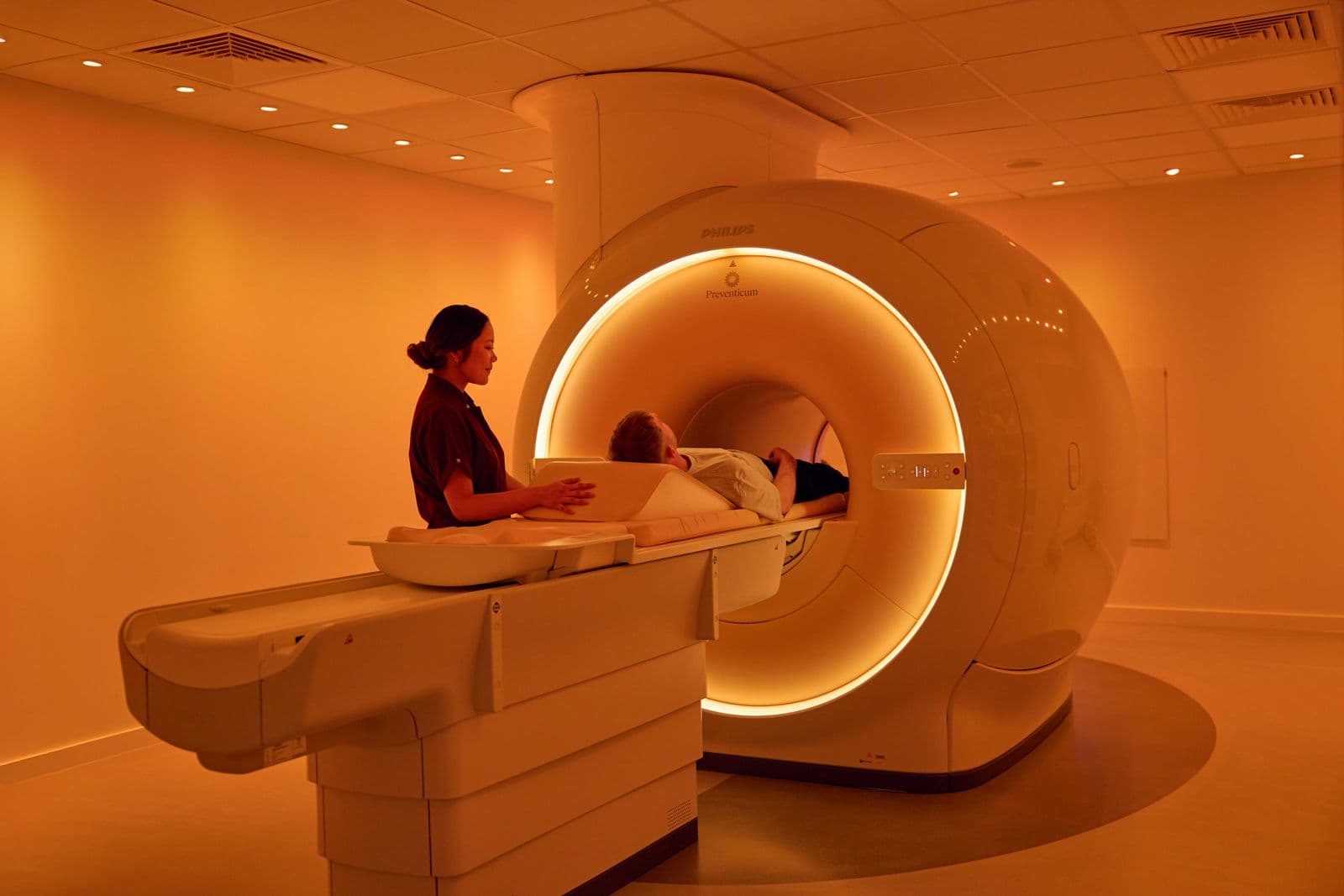
Preventicum
London · United Kingdom
London health-assessment clinic off Chancery Lane: one-day Ultimate and Optimal assessments from GBP 8,500, with cardiac and biparametric MRI imaging.

The Heal Clinic London
London · United Kingdom
The Heal Clinic London lists 5 longevity services, including stem cell therapy, NAD+ IV therapy, hormone optimisation and PRP injections.

The London General Practice
London · United Kingdom
The London General Practice is a longevity clinic listing VO2 max testing, biological age testing and biomarker panels.
The Longevity Doctor
London · United Kingdom
The Longevity Doctor is a longevity clinic in London listing VO2 max testing, biological age testing, biomarker panels and hormone optimisation.
Kent
Kent guide
Cities in the United Kingdom
Each city page carries the local listings, the services those clinics offer and what to know before booking there.
What you will find in the United Kingdom
Private longevity clinics in the United Kingdom sell broad testing that the National Health Service (NHS) deliberately does not offer to adults without symptoms. The providers filling that gap are not one kind of business, and which kind you have walked into decides most of what you get.
Some are diagnostic imaging centres built around an expensive scanner, where a radiographer, the technician who runs the machine, produces images that a radiologist, the doctor who interprets them, reports on afterwards without ever meeting you. Others are doctor-led private general practices, several of them around London's Harley Street, which added preventive testing to an existing list of fee-paying patients.
At the far end sit single-service providers with one procedure and a nurse to deliver it, and direct-to-consumer testing companies that post you a kit or send you to a phlebotomist, the person who draws the blood. Whether a doctor ever reads your result is a question about the business, not about the test.
Longevity medicine in the United Kingdom
England places a statutory duty on local authorities to offer an NHS Health Check to eligible residents aged 40 to 74 once every five years, and it is a cardiovascular risk assessment rather than a broad search for disease: height, weight, waist, blood pressure, cholesterol, sometimes blood sugar, worked into a score for your chance of a heart or circulation problem over the next ten years. The people it leaves out are the ones already known to be at risk - anyone diagnosed with diabetes, hypertension, heart failure or stroke among other conditions, anyone prescribed statins, and anyone previously assessed at a twenty per cent or higher ten-year risk - on the logic that they belong under care rather than under screening.
Beyond it the adult screening list in England is short by design: cervical screening from 25 to 64, breast screening from 50 to 70, a bowel cancer home test kit every two years from 50 to 74, one ultrasound scan offered to men when they turn 65 for abdominal aortic aneurysm, a dangerous swelling of the body's main artery, and targeted lung screening for people aged 55 to 74 who have ever smoked.
What goes on that list is decided by the UK National Screening Committee (UK NSC), which advises ministers and the NHS in all four UK countries, and its refusals are the more instructive half of its work. It does not recommend population screening for prostate cancer, judging that harms including incontinence and erectile dysfunction in men who do not need treatment outweigh the benefit, and since its March 2026 review it has recommended prostate specific antigen (PSA) blood testing every two years only for men aged 45 to 61 who carry a pathogenic BRCA2 gene variant, an inherited change able to cause disease, together with a family history of breast, ovarian, pancreatic or prostate cancer. It does not recommend screening for ovarian cancer, because the large UK trial that tested it found screening did not reduce the number of women who died of the disease, nor for atrial fibrillation, an irregular heart rhythm, because it is not known whether screening does more good than the way cases are found and managed now.
Most of what a longevity clinic sells has an ordinary NHS route when there is a clinical reason for it, and the reason is the whole difference. A general practitioner can order blood tests, refer you for imaging when you have symptoms, and arrange cascade testing, which works outward from one diagnosed person to their blood relatives, where familial hypercholesterolaemia, an inherited form of very high cholesterol, is suspected; the National Institute for Health and Care Excellence (NICE) covers that in a dedicated guideline. The Royal College of Radiologists recommends body scanning only to investigate symptoms of disease and only under a doctor's direction, warning that scanning people without symptoms turns up irregularities that were never going to cause harm.
Longevity medicine is not a recognised speciality in the United Kingdom. The General Medical Council (GMC) keeps two statutory registers under the Medical Act 1983, the General Practitioner Register and the Specialist Register, the second built on holding a Certificate of Completion of Training in a recognised speciality, and no such certificate exists in longevity or age-management medicine, so the useful question is what a clinic's doctor is registered for instead.
Premises are regulated separately: in England a provider carrying on regulated activities such as diagnostic and screening procedures must register with the Care Quality Commission (CQC), and the exception for doctors treating patients in a surgery or consulting room does not extend to intravenous medicines or magnetic resonance imaging. Scotland, Wales and Northern Ireland run their own systems through Healthcare Improvement Scotland, Healthcare Inspectorate Wales and the Regulation and Quality Improvement Authority.
Testosterone and somatropin, a synthetic form of human growth hormone, are Class C controlled drugs under the Misuse of Drugs Act 1971 rather than ordinary prescription medicines. A marketing authorisation is the licence a medicine needs before it can be sold in the UK, and peptides and similar products that do not hold one reach patients, if at all, as unlicensed specials: supplied in response to an unsolicited order, made to a named prescriber's specification, for a patient in that prescriber's direct care. A condition of that exemption is that no advertisement for the product is published by anyone, so promoting an unlicensed injectable by name puts the supply outside it.
Cell and gene products are stricter again: the Medicines and Healthcare products Regulatory Agency (MHRA) classes them as advanced therapy medicinal products, which must go through clinical trials and hold a marketing authorisation before they can be placed on the UK market.
Services available in the United Kingdom
Every service listed by at least one verified clinic here, with the clinics that offer it. Each service links to what it is, what it costs and what the evidence shows.
Diagnostic
A longevity blood panel goes well past a routine check-up, adding cholesterol particle counts, inflammation markers, hormones and early metabolic signals.
The London General Practice, Echelon Health, My Longevity Centre, HOOKE London, Preventicum and 3 more
A biological age test estimates how old your body behaves, usually by reading chemical tags on your DNA and converting the pattern into a number of years.
The London General Practice, London Regenerative Institute, The Longevity Doctor, Aeon Sciences
An executive physical packs a year of check-ups into one day: bloods, imaging, a heart and fitness assessment, and a doctor who explains all of it.
A full-body MRI is a whole-body scan that looks for tumours, aneurysms and organ disease before symptoms appear, using magnets rather than X-rays.
A VO2 max test measures the most oxygen your body can use during hard exercise, the fitness number most strongly tied to long-term health.
A continuous glucose monitor is a small arm sensor that tracks blood sugar every few minutes for two weeks, showing what each meal actually does to you.
Therapy
IV vitamin therapy drips vitamins and minerals straight into a vein. It is real treatment for a diagnosed deficiency and weakly supported for anyone else.
Juvenology Clinic, My Longevity Centre, London Regenerative Institute, The Heal Clinic London, Longevity Centre London
Hormone optimisation is prescription treatment - testosterone, menopausal hormone therapy, thyroid - given for symptoms confirmed by repeat blood tests.
My Longevity Centre, The Heal Clinic London, The Longevity Doctor, Longevity Centre London
NAD+ IV therapy is a slow drip of a molecule every cell uses to move energy around. The reasoning is well known; the human evidence behind it is very thin.
Peptide therapy prescribes short chains of amino acids that act as signals in the body, a category running from licensed medicines to unapproved compounds.
A PRP injection concentrates the healing platelets from your own blood and puts them back into a painful joint, a stubborn tendon or the scalp.
Juvenology Clinic, London Regenerative Institute, The Heal Clinic London
Stem cell therapy injects cells from your own body or a donor, most often into a painful joint. Almost all of it is unapproved and the trials are mixed.
Hyperbaric oxygen therapy means breathing oxygen inside a pressurised chamber. It is proven hospital treatment for a short, specific list of conditions.
Concierge
Concierge medicine is an annual fee paid to a practice for access: same-day appointments, longer visits, and a doctor who carries far fewer patients.
The London General Practice, HOOKE London, Preventicum, Aeon Sciences
Lifestyle
Red light therapy shines red and near-infrared light on the skin. The evidence is reasonable for skin and hair, mixed for pain, and absent for ageing.
A cold plunge is a few minutes in water around 4 to 15 degrees Celsius. Reliable for mood and soreness, and best kept well away from your lifting sessions.
What it costs in the United Kingdom
From this directory
Of the 7 priced clinics in the United Kingdom, 6 are in the upper band ($$$) and 1 in the top band ($$$$). 5 further listings do not publish enough to place. 1 of the 12 requires a membership rather than selling services one at a time; the rest can be booked individually.
Private medical insurance in the UK is generally written to pay for treating conditions rather than for looking for them. Bupa's Select policy guide, for instance, carries an exclusion covering screening, monitoring and preventive treatment: no health checks or health screening, no routine tests or monitoring of medical conditions, and no tests or procedures carried out for screening or monitoring purposes. The same guide carries a cancer screening benefit as a separate item that applies only if your membership certificate shows it, which is the pattern to check in your own wording, though the working assumption should be that you are paying for this yourself.
The gap between two quoted prices is usually a gap in who reads the result rather than in what the machine measures. The laboratory work behind a blood panel is much the same test wherever the blood is drawn; what varies is whether a doctor sits down and explains it, whether the scan is reported by a radiologist who subspecialises in that part of the body, and whether the appointment after an ambiguous finding is included or billed again. Settle these in writing before you pay:
- the name and General Medical Council reference number of the clinician responsible for interpreting your results
- who pays for the further tests that a borderline finding triggers, and how quickly they can be arranged
- whether a copy of the full report, rather than a summary, goes to your own general practitioner
If you are travelling for this, and within Britain that usually means travelling to London, the appointment is the easy part. Paying privately does not move you along an NHS queue - Department of Health guidance for patients who want to buy additional private care restates the principle that access to NHS services is based on clinical need rather than ability to pay, requires any additional private care to be delivered separately from NHS care, and tells NHS organisations not to withdraw NHS care simply because someone has bought private care.
You have a right of access to a copy of your records from the clinic, and organisations normally have one month to respond. The Private Healthcare Information Network (PHIN), whose publication duties come from a Competition and Markets Authority order, publishes information on private consultants and hospitals, though it was built around inpatient and day-case procedures, so an outpatient testing service may not appear there at all.
What the evidence says
Independent reviews of the research behind services offered by clinics in the United Kingdom. They run whether or not the verdict suits the directory.
Longevity clinics in the United Kingdom: common questions
Does the NHS offer a free health check instead?
Yes. The National Health Service offers a free NHS Health Check, and in England local authorities have a statutory duty to offer one to every eligible resident aged 40 to 74 once every five years. It is a cardiovascular risk assessment rather than a broad search for disease, covering height, weight, waist, blood pressure, cholesterol and sometimes blood sugar. People already diagnosed with conditions such as diabetes, hypertension or heart failure, and people already prescribed statins, are not eligible, because they should already be under regular care.
Will private medical insurance in the UK pay for longevity testing?
Almost certainly not. British private medical insurance is generally written to pay for treating conditions rather than for testing people who feel well. Bupa's Select policy guide, for example, excludes health checks and health screening outright, along with routine tests and any test or procedure carried out for screening or monitoring purposes. Some policies add a screening benefit as a separate item that applies only if your membership certificate shows it, so read your own wording, but budget as a self-payer.
Is longevity medicine a recognised medical speciality in the United Kingdom?
No. The General Medical Council keeps a Specialist Register and a General Practitioner Register under the Medical Act 1983, and neither contains an entry for longevity or age-management medicine, because no Certificate of Completion of Training exists in it. A doctor working at a longevity clinic holds a licence to practise and may well hold specialist registration in something else, such as general practice, cardiology or radiology. Check which one on the GMC's online register before you book.
Is a whole-body MRI scan worth having if I have no symptoms?
A whole-body magnetic resonance imaging (MRI) scan is not recommended for people without symptoms by the Royal College of Radiologists. Its stated position is that body scanning should be used to investigate symptoms of disease and only under a doctor's direction, because scanning people who feel well finds irregularities that were never going to cause harm, which can lead to anxiety, repeat scans and treatment nobody needed. Whole-body imaging is not part of any NHS screening programme in England.
How do I check that a private clinic and its doctors are properly registered?
Check two registers rather than one. Individual doctors appear on the General Medical Council's online register, which shows whether they hold a licence to practise and any specialist or general practice registration. Premises are separate: in England a provider carrying on regulated activities such as diagnostic and screening procedures must register with the Care Quality Commission, and the exception for doctors treating patients in a surgery or consulting room does not extend to intravenous medicines or magnetic resonance imaging. Scotland, Wales and Northern Ireland use their own regulators.